Rebalancing Your Microbiome for Lasting Vitality
At Longévité Palm Beach, we understand that true health begins in the gut. Whether you’re struggling with digestive discomfort, food sensitivities, chronic inflammation, or fatigue, our functional medicine approach focuses on uncovering and addressing gut imbalances, such as dysbiosis, to restore optimal health and vitality.
Gut Health and Restoration
You already know something is wrong with your gut. You don’t need a page to convince you.
Maybe it’s the bloating that shows up every afternoon regardless of what you ate. The food sensitivities that keep multiplying. The brain fog, the fatigue, the skin breakouts that no dermatologist can explain. Or maybe it’s the cycle you’ve been stuck in for years: try an elimination diet, feel a little better, relapse, try again.
Your gastroenterologist ran a scope. Nothing structural. Your bloodwork is “normal.” You’ve tried probiotics, enzymes, bone broth, and every gut health protocol on the internet. Some helped for a while. None resolved it.
The reason is usually the same: no one identified what’s actually wrong. They treated symptoms without testing for the specific imbalance driving them.
At Longévité Palm Beach, Michelle Kavall, FNP-C, FMACP, runs a clinical gut health program built around advanced diagnostics, targeted treatment, and ongoing clinical support. She is a Board-Certified Family Nurse Practitioner, Certified Functional Medicine Practitioner, and member of the Institute for Functional Medicine. Her approach is not a set-it-and-forget-it protocol. It is a hands-on clinical partnership where testing drives decisions, progress is monitored continuously, and the plan changes when the data says it should.
Book a Complimentary 15-Minute Consultation
Benefits of Gut Health Restoration
- Improved digestion and nutrient absorption
- Reduced bloating, gas, and discomfort
- Clearer skin and reduced inflammation
- Enhanced immune system resilience
- More stable mood, energy, and mental clarity
- Long-term protection against chronic disease
Why Gut Health Is More Complicated Than Most Practitioners Make It Sound
The gut is not a standalone system. It is the intersection of your immune function, your hormone metabolism, your nervous system, and your nutrient absorption. When something goes wrong in the gut, the effects rarely stay contained to digestion.
This is why so many women in their 30s, 40s, and 50s show up with a cluster of symptoms that seem unrelated but share a common root: bloating alongside fatigue, skin issues alongside mood shifts, weight resistance alongside hormonal imbalance. Conventional medicine treats each of these separately. A gastroenterologist for the bloating. A dermatologist for the skin. An endocrinologist for the thyroid. No one connects the dots.
Functional medicine does. And the gut is often where the connecting starts.
Your gut microbiome influences how your body processes estrogen, converts thyroid hormone, regulates inflammation, produces neurotransmitters, and absorbs the nutrients that power everything else. When the microbiome is disrupted, whether by dysbiosis, bacterial overgrowth, intestinal permeability, infection, or chronic inflammation, the downstream effects can show up almost anywhere.
This does not mean every health issue is a gut issue. It means the gut is worth investigating seriously before assuming the problem is somewhere else. And that investigation requires the right testing, not guesswork.
The Longévité Gut Health Program
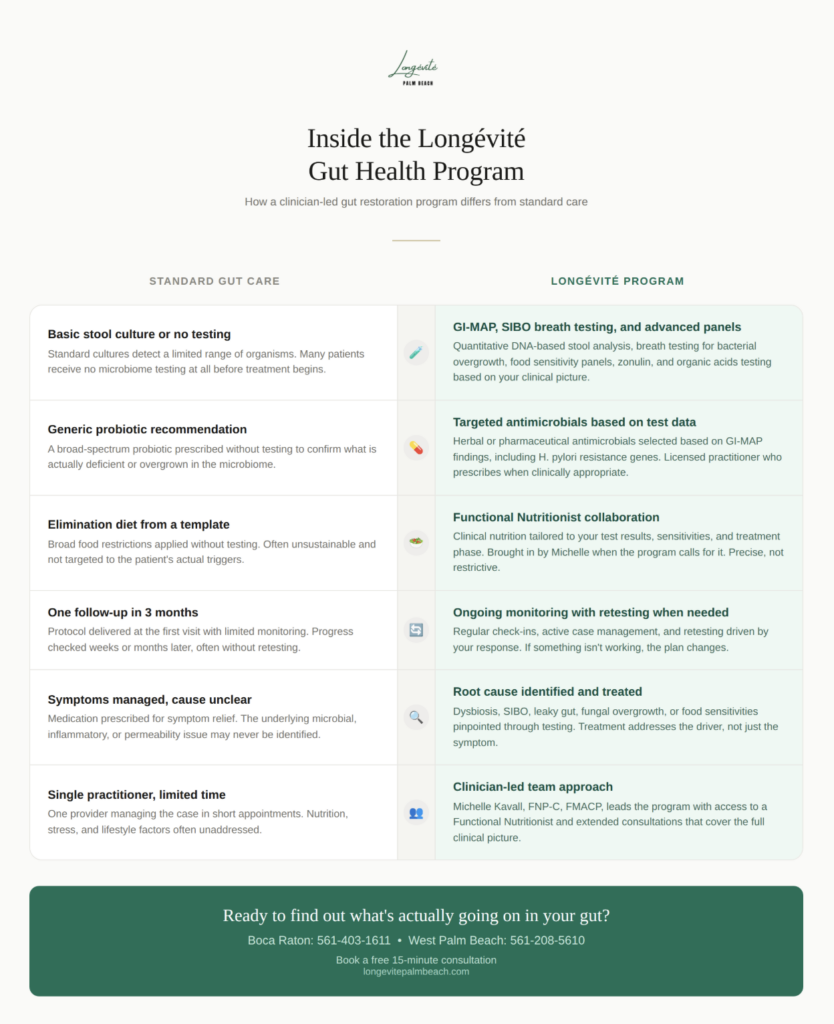
Michelle built this program around a simple principle: test first, treat what you find, monitor the response, and adjust when the data tells you to. Every step is clinician-led and personalized. There is no standard protocol that every patient follows.
Advanced Diagnostic Testing
The program starts with testing that goes well beyond what conventional gastroenterology typically orders. Depending on your symptoms, history, and clinical presentation, Michelle may use:
GI-MAP (Gastrointestinal Microbial Assay Plus), which uses quantitative PCR technology to identify and measure specific bacteria, parasites, fungi, viruses, and digestive markers in a single stool sample. Unlike standard stool cultures, GI-MAP quantifies what is present, so Michelle can see not just whether a pathogen exists but how much is there and whether it is clinically significant. It also tests for H. pylori virulence factors and antibiotic resistance genes, which directly shape treatment decisions.
SIBO breath testing for patients whose symptoms suggest small intestinal bacterial overgrowth. Breath testing measures hydrogen, methane, and hydrogen sulfide gas production to determine whether bacteria have migrated into the small intestine, where they do not belong. SIBO is one of the most commonly missed diagnoses in patients with chronic bloating, gas, constipation, and post-meal discomfort.
Food sensitivity panels to identify immune-mediated reactions to specific foods that may be driving chronic inflammation, skin conditions, or digestive symptoms. These are not the same as food allergies. Sensitivities are subtler, delayed, and often missed without targeted testing.
Zonulin testing when intestinal permeability (leaky gut) is suspected. Zonulin is a protein that regulates the tight junctions between intestinal cells. Elevated levels indicate that the gut barrier has been compromised, allowing particles into the bloodstream that should not be there.
Organic acids testing (OAT) when the clinical picture suggests yeast overgrowth, bacterial metabolite imbalances, or nutrient absorption issues that stool testing alone may not capture. OAT evaluates metabolic byproducts in urine, providing a different lens on how the gut is affecting the body systemically.
Supporting bloodwork for inflammation markers (CRP, homocysteine), nutrient status (B12, folate, iron, vitamin D, magnesium), liver function, and metabolic markers that help complete the picture.
Michelle does not run every test on every patient. Testing is guided by your symptoms, your history, and what the clinical picture suggests. The goal is actionable data, not a fishing expedition.
Personalized Treatment Protocols
Once testing identifies the specific imbalances, Michelle builds a targeted protocol. This is not a generic supplement stack or an elimination diet pulled from a template. Treatment is tied directly to clinical findings and may include:
Targeted antimicrobials (herbal or pharmaceutical) to clear identified pathogens, bacterial overgrowth, or fungal imbalances. Michelle is a licensed practitioner who can and does prescribe medication when it is clinically appropriate. Antimicrobial selection is informed by the GI-MAP’s antibiotic resistance gene data when relevant.
Gut lining restoration using evidence-based protocols to repair intestinal permeability and rebuild mucosal integrity. This is the rebuilding phase that many gut protocols skip or rush.
Strategic probiotic and prebiotic support to restore microbial diversity. Not a generic probiotic. Specific strains selected based on what the testing showed is deficient or overrepresented.
Digestive enzyme and bile acid support when testing indicates digestive insufficiency that is contributing to malabsorption, bloating, or downstream imbalances.
Nutritional strategy developed in coordination with a Functional Nutritionist when the program calls for it. This is not a generic meal plan. It is clinical nutrition tailored to your test results, your sensitivities, and your treatment phase. Michelle determines when nutritional support is needed and brings in the right specialist.
Lifestyle and stress management protocols, because cortisol directly affects gut motility, gut permeability, and microbial balance. Ignoring the stress component is one of the most common reasons gut protocols stall.
Ongoing Monitoring and Clinical Pivots
This is where Longévité’s program separates from most practices. Michelle does not hand you a protocol and schedule a follow-up in three months.
The program includes regular check-ins where Michelle evaluates your response, adjusts dosing, modifies dietary recommendations, and determines whether retesting is needed. Retesting happens when the clinical picture calls for it. For some patients, that is a few weeks into treatment. For others, it is further out. The timeline is driven by how your body responds, not by a fixed calendar.
This active monitoring model means problems are caught early. If a protocol is not producing the expected response, Michelle pivots. She does not wait until the end of a treatment cycle to discover something is not working.
Book a Complimentary 15-Minute Consultation
Conditions the Gut Health Program Addresses
Dysbiosis and Microbial Imbalance
An overgrowth of harmful bacteria, an underrepresentation of beneficial species, or a loss of microbial diversity. Dysbiosis is one of the most common findings on GI-MAP testing and often underlies a wide range of symptoms beyond digestion, including fatigue, skin issues, and immune dysfunction.
SIBO (Small Intestinal Bacterial Overgrowth)
Bacteria that belong in the large intestine migrate into the small intestine, where they ferment food prematurely and produce gas, bloating, pain, and altered bowel habits. SIBO is frequently misdiagnosed as IBS. Breath testing is the primary diagnostic tool, and treatment often requires a phased approach of antimicrobials followed by motility support and prevention.
Intestinal Permeability (Leaky Gut)
When the tight junctions between intestinal cells are compromised, partially digested food particles, toxins, and bacteria enter the bloodstream and trigger systemic immune responses. This can drive food sensitivities, chronic inflammation, autoimmune flares, skin conditions, and brain fog. Zonulin testing helps confirm the diagnosis.
IBS and Chronic Digestive Symptoms
Bloating, gas, constipation, diarrhea, reflux, and abdominal pain that conventional gastroenterology has managed with medication but not resolved. Functional testing often reveals the specific mechanism behind IBS symptoms, whether that is SIBO, dysbiosis, food sensitivities, enzyme deficiency, or bile acid dysfunction.
Food Sensitivities and Immune-Mediated Reactions
Delayed immune responses to specific foods that drive chronic inflammation, digestive distress, skin conditions, headaches, and fatigue. Unlike food allergies (which produce immediate reactions), sensitivities are subtle and cumulative. Targeted testing identifies the triggers so dietary modifications are precise, not overly restrictive.
Candida and Fungal Overgrowth
Yeast overgrowth in the gut, often related to prior antibiotic use, high-sugar diets, or immune suppression. Symptoms include bloating, sugar cravings, brain fog, recurrent infections, and fatigue. GI-MAP and organic acids testing can both help identify fungal overgrowth patterns.
Chronic Inflammation and Autoimmune Connections
Gut dysfunction is increasingly recognized as a contributing factor in autoimmune conditions including Hashimoto’s thyroiditis, rheumatoid arthritis, and lupus. Restoring gut barrier integrity and microbial balance can reduce the inflammatory load that triggers or sustains autoimmune activity. This connection is real, but it is not universal. Michelle evaluates it on a case-by-case basis.
The Gut-Hormone Connection
For women in their 30s through 50s, gut health and hormonal health are often intertwined in ways that neither a gastroenterologist nor a gynecologist typically investigates.
Your gut microbiome contains a collection of bacteria known as the estrobolome that directly influences how your body metabolizes and eliminates estrogen. When the gut is disrupted, estrogen can recirculate instead of being cleared, contributing to estrogen dominance, PMS, heavy periods, weight gain, and mood instability.
Gut health also affects thyroid hormone conversion. The majority of T4-to-T3 conversion happens outside the thyroid, and gut inflammation can impair this process. Women with persistent thyroid symptoms despite “normal” TSH levels often have an underlying gut issue that has never been evaluated.
This does not mean every gut patient needs hormone therapy, or that every hormone patient has a gut problem. It means the two systems talk to each other, and ignoring one while treating the other often explains why treatment stalls. Michelle evaluates both when the clinical picture warrants it, and addresses each based on what testing reveals.
Book a Complimentary 15-Minute Consultation
Gut Health in South Florida
South Florida’s climate and environment create specific challenges for gut health that practitioners in other regions may not encounter as frequently.
Mold exposure is more common in humid coastal environments than most people realize. Chronic mold exposure can drive gut inflammation, disrupt microbial balance, and suppress immune function. For patients with persistent gut symptoms that do not respond to standard protocols, environmental exposure is worth investigating.
The stress patterns common across Boca Raton, Delray Beach, and West Palm Beach, particularly among high-performing professionals and busy families, create chronic cortisol elevation that directly impacts gut motility and permeability. Stress is not a soft factor in gut health. It is a physiological driver that Michelle addresses as part of the program.
Dietary patterns in South Florida, including frequent dining out, alcohol consumption, and high processed food intake, create additional strain on digestive function and microbial balance. The nutritional component of the program accounts for the realities of how people in this market actually eat, not an idealized version.
Longévité Palm Beach serves patients from two locations:
Boca Raton: 561-403-1611 | West Palm Beach: 561-208-5610
Frequently Asked Questions About Gut Health and Restoration
What are the signs that I might need gut health testing?
Persistent bloating, gas, constipation, diarrhea, or abdominal discomfort that has not been resolved by conventional treatment. Food sensitivities that keep expanding. Skin conditions like eczema, acne, or psoriasis that do not respond to topical treatment. Unexplained fatigue, brain fog, or mood changes. Autoimmune conditions that are poorly controlled. If your symptoms have been dismissed as “just IBS” or “stress-related” without testing, that is often a sign that the right investigation has not happened yet.
What is the GI-MAP test and why do you use it?
The GI-MAP is a comprehensive stool analysis that uses quantitative PCR (DNA-based) technology to identify and measure bacteria, parasites, fungi, viruses, and digestive health markers. It is more precise than traditional stool cultures because it quantifies organisms rather than just detecting them. This matters because the clinical significance of a finding depends on how much is present, not just whether it exists. The GI-MAP also tests for H. pylori virulence factors and antibiotic resistance genes, which helps guide treatment decisions.
How is this different from what my gastroenterologist does?
Conventional gastroenterology excels at ruling out structural disease through endoscopy and colonoscopy, and at managing acute conditions. Functional gut health testing looks at the microbial, metabolic, and inflammatory picture that those procedures do not assess. The two approaches are complementary. Michelle does not replace your gastroenterologist. She investigates the layers that standard GI workups typically do not cover.
Do you prescribe medication for gut issues?
Yes, when it is clinically appropriate. Michelle is a licensed practitioner who can prescribe antimicrobials, prokinetics, and other medications as part of a gut health protocol. Medication is one tool in the treatment plan, used alongside nutrition, supplementation, and lifestyle modification based on what the testing shows.
How long does gut restoration take?
It depends entirely on the condition and severity. Some patients notice meaningful improvement within weeks, particularly with SIBO or specific pathogen clearance. Full microbiome restoration, gut lining repair, and long-term stabilization typically take several months of active clinical work. Michelle sets realistic expectations from the start and tracks progress with follow-up testing.
Will I need to follow a strict elimination diet?
Not necessarily. Dietary modifications are guided by your test results, not applied as a blanket restriction. When a Functional Nutritionist is brought into your care team, their role is to build a sustainable eating plan that supports your treatment phase, not to put you on an unsustainable list of restrictions. The goal is precise modification based on data, not fear-based food avoidance.
Does insurance cover this program?
Most insurance plans do not cover the extended consultations, specialty testing, and ongoing monitoring that a functional gut health program requires. Longévité provides superbills for out-of-network reimbursement. Many patients find the investment worthwhile because they are getting answers and resolution after years of inconclusive conventional care.
Can I still see my gastroenterologist while working with you?
Absolutely. Michelle collaborates with your existing medical team. Functional gut health care complements conventional gastroenterology. It does not replace it.
Book a Complimentary 15-Minute Consultation
If you’re ready to transform your gut health and unlock your body’s full potential, contact Longévité Palm Beach today. Together, we’ll craft a personalized path to restore your microbiome and reclaim your vitality.