PCOS Has a New Name. Here’s What Changed and What Didn’t.
If you have been diagnosed with PCOS, or suspect you might have it, there is an important update worth knowing about.
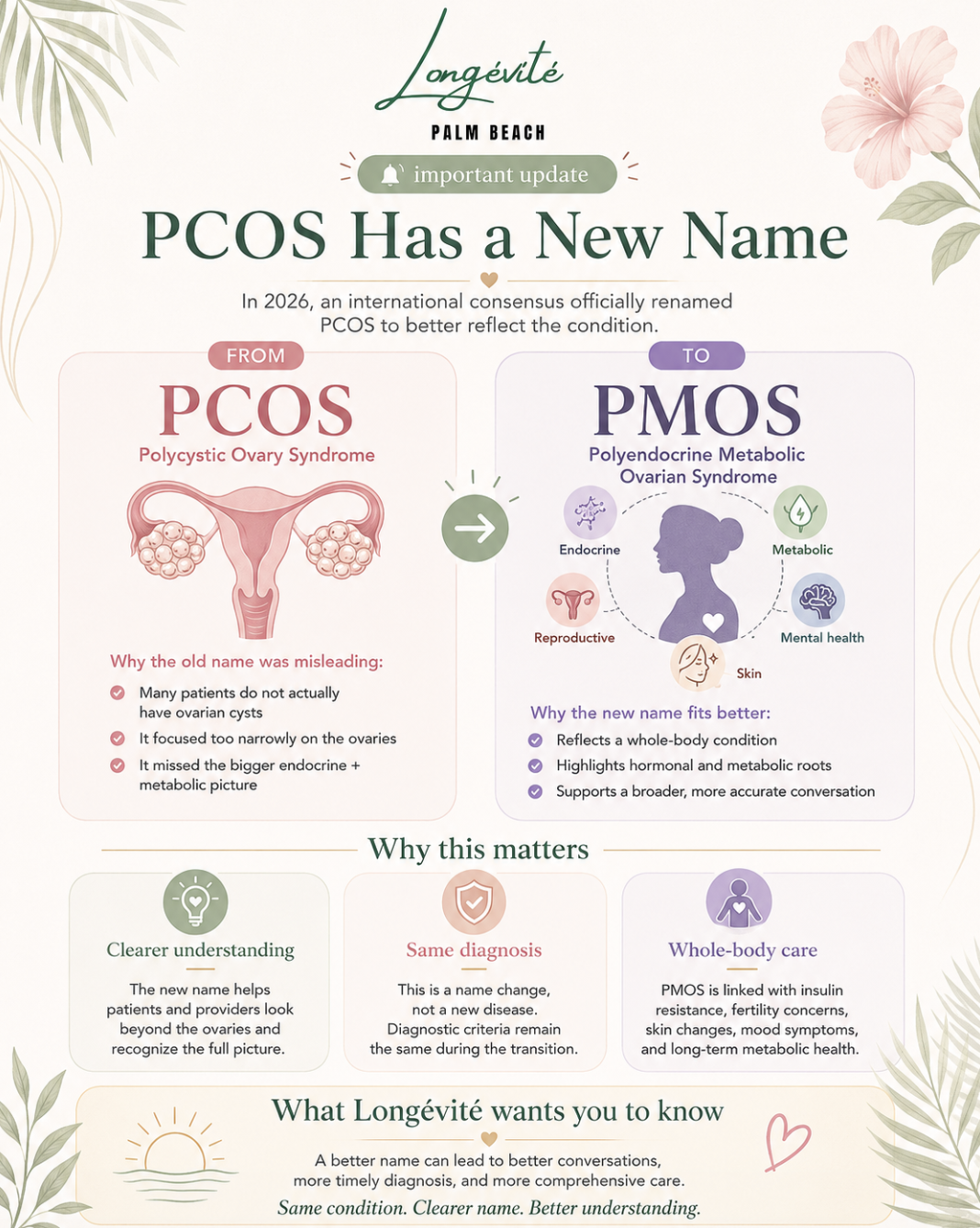
On May 12, 2026, a global consensus of over 50 clinical, research, and patient organizations officially renamed Polycystic Ovary Syndrome (PCOS) to Polyendocrine Metabolic Ovarian Syndrome (PMOS). The paper was published in The Lancet and represents more than a decade of work to correct a name that has been misleading patients and providers for years.
Your diagnosis has not changed. The criteria are the same. But the way this condition is understood, and eventually treated, just took a meaningful step forward.
Why the name needed to change
“Polycystic ovary syndrome” implied that ovarian cysts were the central feature of the condition. They are not. Many women with PCOS never have cysts. The “cysts” that appear on ultrasound are actually arrested follicles, not pathological cysts.
More importantly, the old name pointed at one organ and missed the bigger picture. PCOS was always a multi-system condition involving insulin resistance, metabolic dysfunction, androgen imbalance, cortisol disruption, cardiovascular risk, skin and hair changes, mood symptoms, and fertility challenges. The narrow framing contributed to delayed diagnoses, fragmented care, and an estimated 70% of affected women going undiagnosed.
What the new name reflects
PMOS, Polyendocrine Metabolic Ovarian Syndrome, was chosen to correct those gaps:
- Polyendocrine recognizes that multiple hormonal systems are involved, not just the ovaries. Insulin, androgens, estrogen, progesterone, cortisol, and thyroid hormones all play a role.
- Metabolic acknowledges that insulin resistance, cardiovascular risk, and metabolic dysfunction are central features, not side effects.
- Ovarian keeps the reproductive component in the picture without making it the entire story.
A more accurate name leads to more comprehensive evaluation, earlier intervention, and fewer women being told their only options are birth control or weight loss.
What this means if you have been diagnosed with PCOS
Nothing about your condition has changed. A PCOS diagnosis is now a PMOS diagnosis. You do not need new testing or a new evaluation just because of the name change.
What should change is the conversation with your provider. A name that leads with “polyendocrine” and “metabolic” should prompt a more thorough evaluation of insulin resistance, metabolic health, and the full hormonal picture, not just cycle regularity and ultrasound findings.
If your evaluation stopped at a basic blood panel and an ultrasound, there may be more to investigate.
How we approach PMOS at Longévité
At Longévité Palm Beach, we have always evaluated this condition as a whole-body hormonal and metabolic issue. The name change validates the approach, but it does not change it.
Michelle Kavall, FNP-C, FMACP, uses advanced diagnostics including DUTCH hormone testing, comprehensive insulin and metabolic panels, full androgen and thyroid assessment, inflammatory markers, and gut health evaluation when clinically indicated. Treatment is built around what the testing reveals, not a standardized protocol.
We wrote a detailed guide on our PMOS condition page that covers the full hormonal and metabolic picture, testing, treatment options, and what to expect from a functional medicine evaluation.
The bottom line
The name change is more than semantics. It is a correction that has been needed for decades, and it has the potential to improve how this condition is diagnosed, treated, and taken seriously.
If you have PMOS (or a previous PCOS diagnosis) and want a deeper understanding of what is driving your symptoms, we are here to help.
Book a Complimentary 15-Minute Consultation
Boca Raton: 561-403-1611 | West Palm Beach: 561-208-5610
Love Our Content? Make Us Your Google Preferred Source